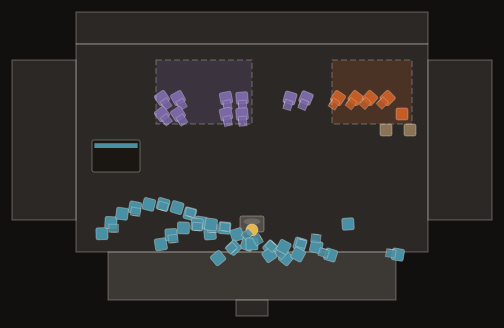
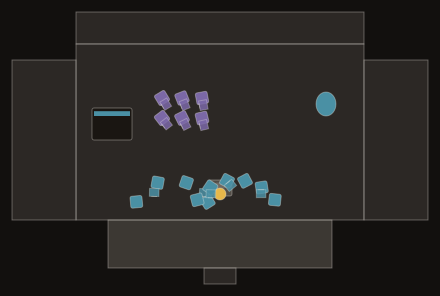
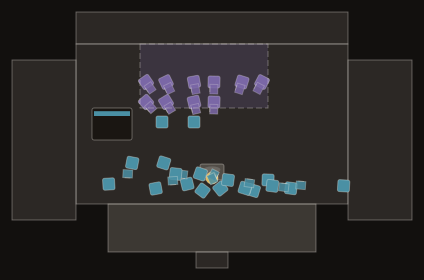
String orchestra seating chart
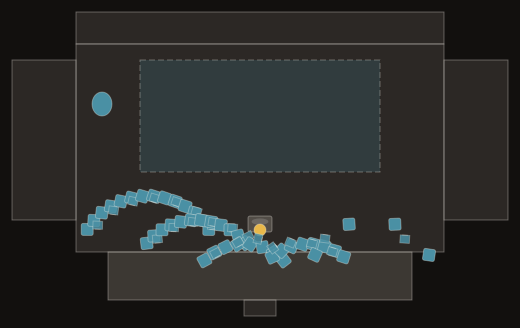
Strings only, in the standard arcs: first and second violins, violas, cellos and basses around the podium, with an optional harp. Use it for string orchestras, chamber orchestras without winds, or the string rehearsal of a full orchestra.
Runs in your browser · no signup to edit and print
What's in this template
- Seated players
- 46
- Music stands
- 23
- Stage deck drawn at
- 46 × 26 ft (14 × 7.9 m)
Also placed: harp, plus podium and conductor.
The counts are a starting point, not a standard instrumentation. Edit them to match your roster.
Chairs by section
| Section | Chairs |
|---|---|
| Violin I | 14 |
| Violin II | 12 |
| Viola | 8 |
| Cello | 8 |
| Double bass | 4 |
Setup tips
- Basses can sit behind the cellos on the right, or in a line across the back for a more blended sound. Try both before rehearsal and compare them.
- Inside players turn the pages. Leave enough room between desks for a quick page turn without bumping bows.
- Need to move a whole section? Select it with a drag, group it, and move it as one block.
How to make it
- Open the String Orchestra template in the free maker. No account is needed.
- Drag, add or delete chairs, stands and risers. Click a chair to label it with a player's name.
- Check the clearance warnings for chairs that are too close together.
- Export a Letter, Tabloid or A3 PDF, or an SVG, with title block, scale bar and section legend.
Not sure the ensemble fits your stage? Try the orchestra stage size calculator.
FAQ
- Where do the cellos sit in a string orchestra?
- In American seating the cellos sit on the conductor's right, outside the violas. Some conductors put the cellos inside, facing the audience, so they project more. The template supports both: select the section and move it.
- Can I add a harpsichord or piano?
- Yes. Drag a piano from the object library. It's drawn to scale (about 6 × 4 ft).