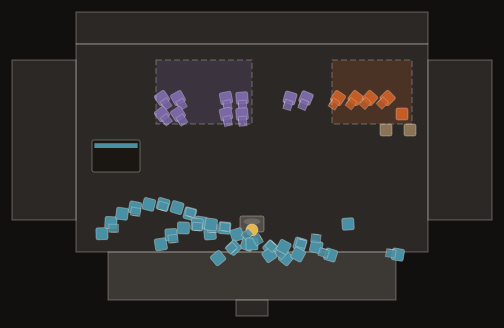
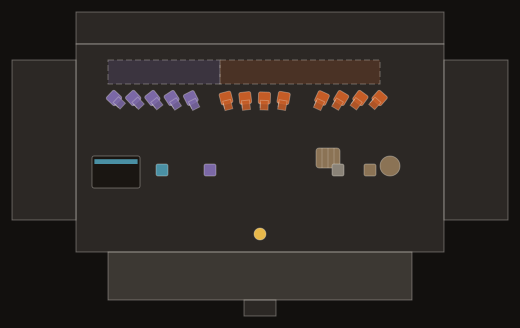
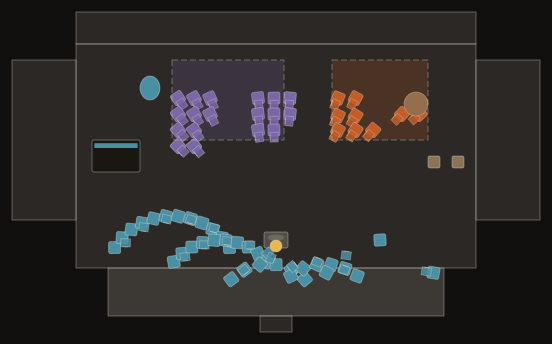
Concert band and wind ensemble seating chart
A concert band or wind ensemble in curved rows: flutes and clarinets in front, saxophones and low reeds next, brass across the back and percussion upstage. It suits school bands, community bands and collegiate wind ensembles.
Runs in your browser · no signup to edit and print
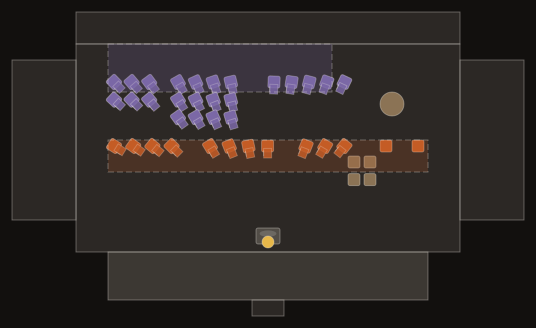
What's in this template
- Seated players
- 40
- Music stands
- 34
- Stage deck drawn at
- 48 × 26 ft (14.6 × 7.9 m)
Also placed: timpani, plus podium and conductor.
The counts are a starting point, not a standard instrumentation. Edit them to match your roster.
Chairs by section
| Section | Chairs |
|---|---|
| Flute | 6 |
| Clarinet | 12 |
| Saxophone | 5 |
| Trumpet | 4 |
| Horn | 4 |
| Trombone | 3 |
| Euphonium | 1 |
| Tuba | 1 |
| Percussion | 4 |
Setup tips
- There's no single standard band setup. Many directors put the flutes front left, the clarinets front right and the trumpets back right. Rearrange the rows to match your sound.
- Put the tubas and euphoniums near the centre-back so the low end anchors the whole band.
- Percussion needs the most floor space. Draw in mallet instruments, timpani and the battery so the setup crew knows what's coming.
How to make it
- Open the Wind Ensemble template in the free maker. No account is needed.
- Drag, add or delete chairs, stands and risers. Click a chair to label it with a player's name.
- Check the clearance warnings for chairs that are too close together.
- Export a Letter, Tabloid or A3 PDF, or an SVG, with title block, scale bar and section legend.
Not sure the ensemble fits your stage? Try the orchestra stage size calculator.
FAQ
- What is the standard seating chart for a concert band?
- There isn't a single standard. A common setup has flutes and clarinets in the front arc, saxophones, bass clarinet and bassoons in the second, horns and low brass in the third, trumpets and trombones in the back row, and percussion behind them.
- Can I label chairs with student names?
- Yes. Click any chair and set its label. The labels show up on the printed chart.