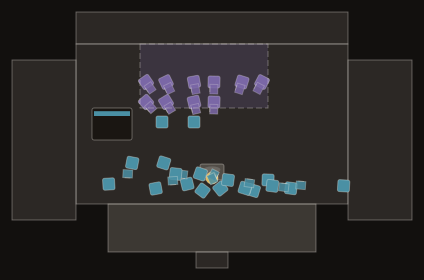
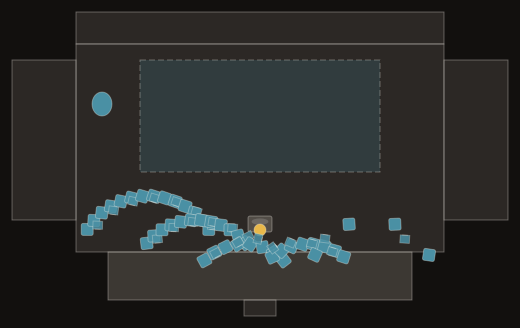
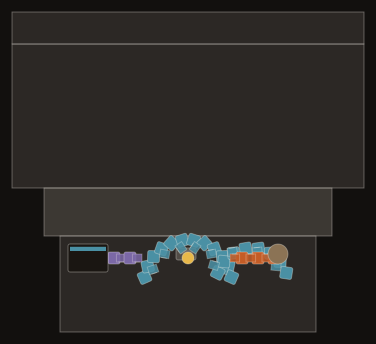
Chamber ensemble stage plot
A string quartet arc plus a few winds and a piano: a flexible starting point for recitals, chamber series and small-ensemble gigs. Small setups still benefit from a scaled plot, especially when the piano lid and page turners take up more space than you'd expect.
Runs in your browser · no signup to edit and print
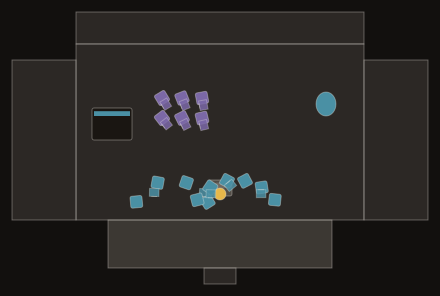
What's in this template
- Seated players
- 16
- Music stands
- 11
- Stage deck drawn at
- 36 × 22 ft (11 × 6.7 m)
Also placed: piano, harp, plus podium and conductor.
The counts are a starting point, not a standard instrumentation. Edit them to match your roster.
Chairs by section
| Section | Chairs |
|---|---|
| String quartet | 4 |
| Strings | 6 |
| Woodwinds | 6 |
Setup tips
- Quartet order varies. Cello on the outside right is common, but many quartets put the viola outside. Label the chairs your way.
- Note the piano's lid orientation. The open lid should face the audience.
- For church and house concerts, draw the room's columns or steps as annotations so the setup crew can see them.
How to make it
- Open the Chamber Ensemble template in the free maker. No account is needed.
- Drag, add or delete chairs, stands and risers. Click a chair to label it with a player's name.
- Check the clearance warnings for chairs that are too close together.
- Export a Letter, Tabloid or A3 PDF, or an SVG, with title block, scale bar and section legend.
Not sure the ensemble fits your stage? Try the orchestra stage size calculator.
FAQ
- How do you seat a string quartet?
- A common seating, left to right from the audience: first violin, second violin, viola, cello, in a shallow arc. Many quartets swap the second violin and cello, or the viola and cello.