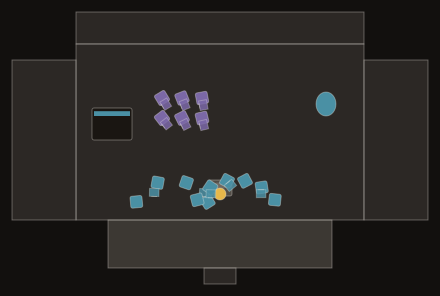
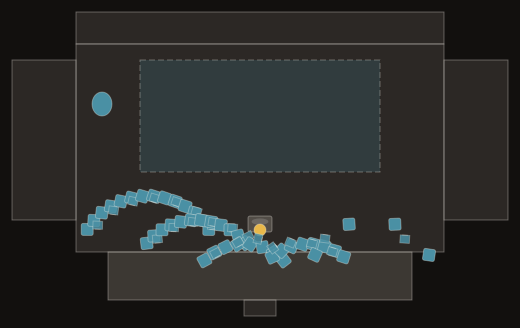
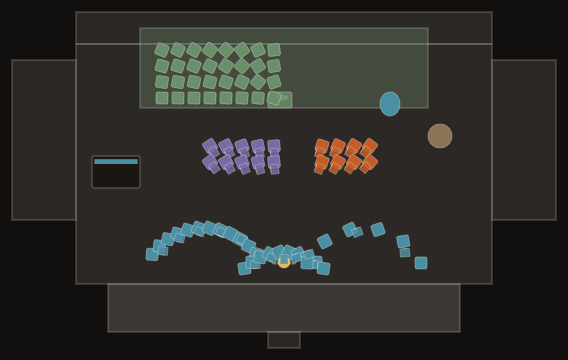
Baroque orchestra seating chart
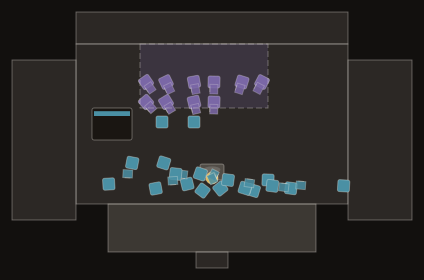
A chamber-sized baroque orchestra with reduced strings, oboes, flutes and bassoon, and a continuo group (harpsichord, cello and bass) placed where the players can see and hear each other.
Runs in your browser · no signup to edit and print
What's in this template
- Seated players
- 28
- Music stands
- 19
- Stage deck drawn at
- 34 × 20 ft (10.4 × 6.1 m)
Also placed: piano, plus podium and conductor.
The counts are a starting point, not a standard instrumentation. Edit them to match your roster.
Chairs by section
| Section | Chairs |
|---|---|
| Violin I | 4 |
| Violin II | 4 |
| Viola | 3 |
| Cello | 3 |
| Double bass | 2 |
| Flute | 4 |
| Oboe | 4 |
| Bassoon | 2 |
| Continuo cello | 1 |
| Continuo bass | 1 |
Setup tips
- The continuo players (keyboard, cello, bass) should be close together and able to see the leader. In baroque practice the first violin or the keyboardist often directs.
- Antiphonal violins (firsts left, seconds right) are common in period performance. Mirror the second violins to try it.
- Use the piano object for a harpsichord and rename the label. Draw the lid to show which way it opens.
How to make it
- Open the Baroque Orchestra template in the free maker. No account is needed.
- Drag, add or delete chairs, stands and risers. Click a chair to label it with a player's name.
- Check the clearance warnings for chairs that are too close together.
- Export a Letter, Tabloid or A3 PDF, or an SVG, with title block, scale bar and section legend.
Not sure the ensemble fits your stage? Try the orchestra stage size calculator.
FAQ
- How is a baroque orchestra seated?
- Usually smaller than a modern orchestra, with the continuo group in the centre. The violins are often split left and right, and the winds sit behind or beside the strings.